

ABOUT
Raptor VISION BATTERY
Leveraging PFU's proprietary optical and object recognition technologies, this AI engine uses a unique algorithm to detect lithium-ion batteries and other hazardous items mixed in municipal and industrial waste.
Waste conveyed on a belt conveyor at a waste treatment facility is scanned using an X-ray imaging system. The transmitted X-ray images are then analyzed by an AI engine powered by PFU's proprietary image recognition algorithm, enabling highly accurate detection of the presence of lithium-ion batteries.
FEATURE
Highly Accurate Recognition Enables a Detection Rate of 94.0%(*1)

Using dual-energy X-ray technology(*2), the system acquires X-ray images that capture the unique features of different materials. PFU's proprietary AI recognition engine then accurately identifies target objects, delivering a high detection rate. The system also determines the exact location of objects to be removed and projects this information directly onto the conveyor, enabling operators to quickly and efficiently locate and remove them.
Sortable Materials
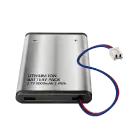
Prismatic

Pouch

Cylindrical
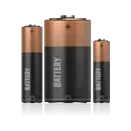
Dry-cell batteries

Various hazardous objects*
*Planned for future support.
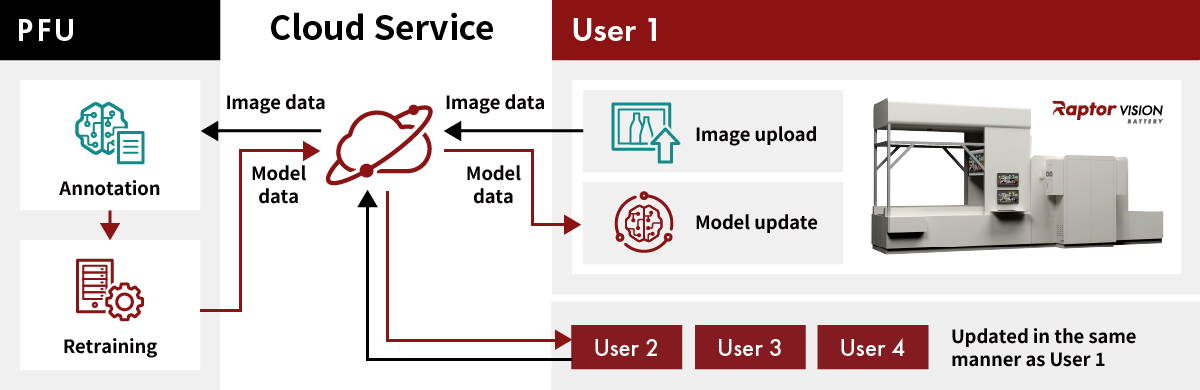
Model Update Service
The AI engine is continuously enhanced through our model update service.
As lithium-ion batteries become increasingly integrated into a wider range of products, the system continuously adapts to evolving waste streams and improves recognition accuracy based on real-world operating conditions.
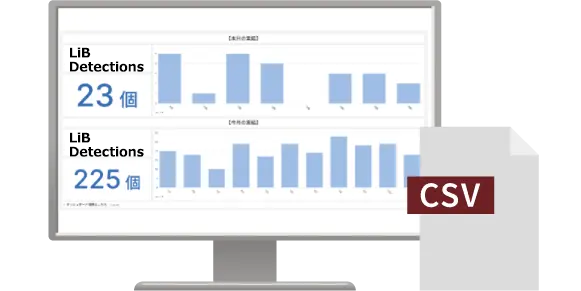
Dashboard Service
The system provides visibility into the number of detected removal targets, such as lithium-ion batteries, on an hourly, daily, monthly, and yearly basis. It also enables users to review detection images and download operational performance data in CSV format.
By leveraging digital data, facilities can gain deeper insights into contamination trends and historical performance, supporting operational analysis, management decision-making, and resource optimization. This contributes to the creation of safer and more efficient working environments at waste treatment facilities.
- Based on the results of demonstration trials conducted with multiple municipalities.
- A material identification technology that uses X-rays of different energy levels and analyzes their transmission rates through an object.